

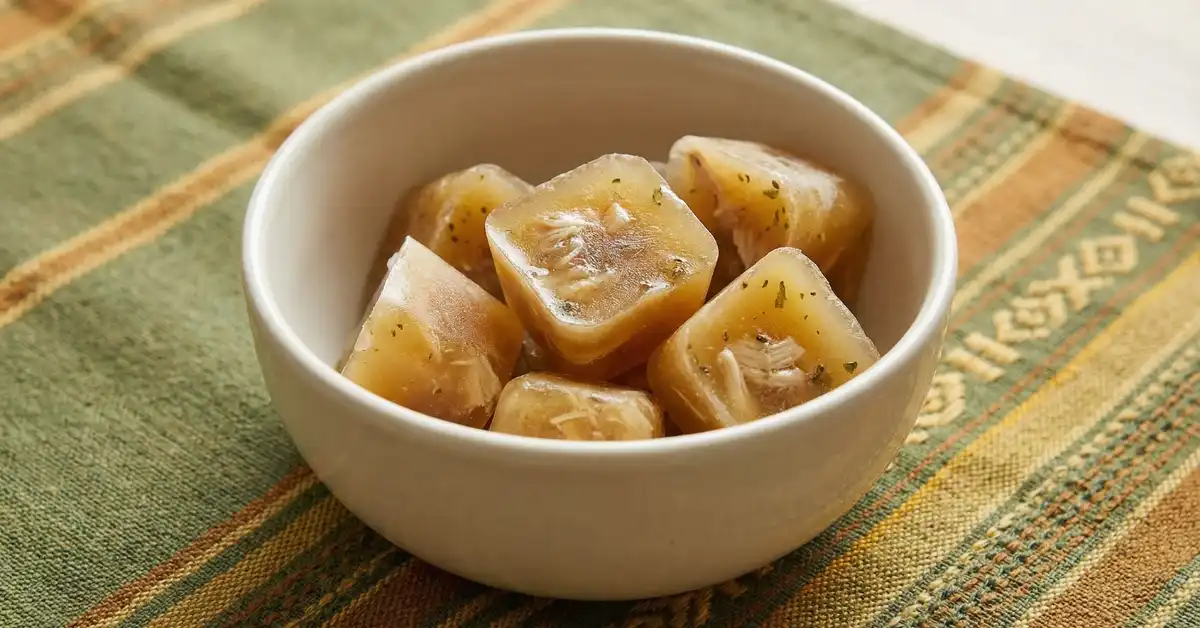
I’m so happy to share this simple frozen treat because it is an easy way to help cats enjoy extra fluids in a fun form. These chicken broth ice cubes are made with pet-safe, low-sodium or unsalted broth that is free from onion, garlic, and other seasonings that are unsafe for cats. I love that this recipe is homemade and lets you control exactly what goes into your cat’s bowl. It is especially nice on warm days or for cats who do not drink much water on their own.
I first started making these chicken broth ice cubes when I noticed my cat enjoyed licking a little broth from a dish more than plain water. Turning that broth into frozen cubes made it even more exciting for her. She likes to sit nearby and slowly lick as it melts.
What makes this recipe special is how gentle and simple it is. There is no cooking involved if you use a ready made pet-safe broth, and the texture encourages slow licking instead of fast eating. Many cats enjoy the smell and taste of chicken, which makes this a nice treat.
Here are a few reasons I keep these in my freezer:
- Very simple ingredients
- No onion, garlic, or heavy seasoning
- Helps support hydration
- Easy to portion and store
- Fun enrichment for cats
Every cat is different, so please talk to your vet if your cat has health issues, food sensitivities, or special diet needs before offering new treats.
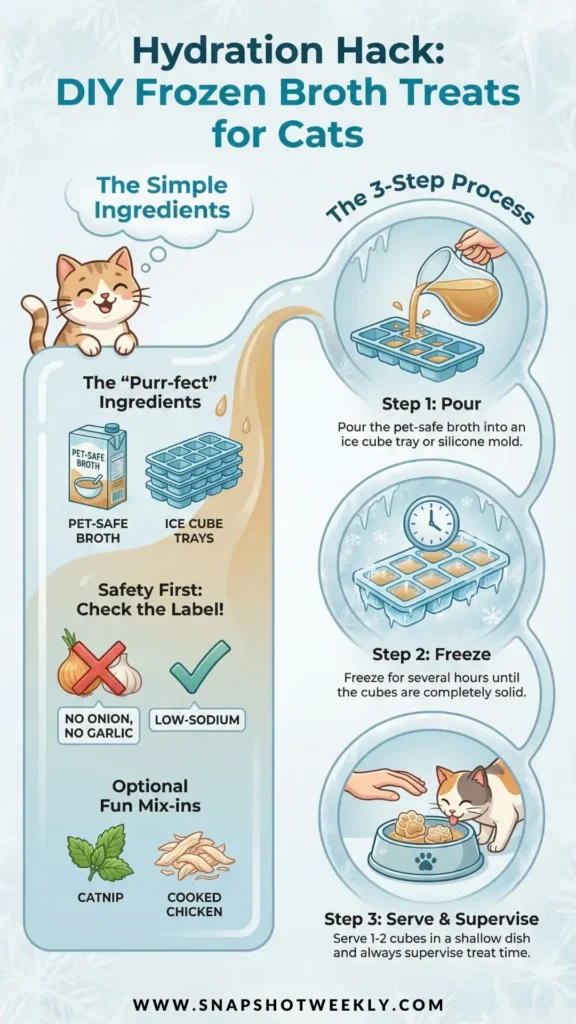
How to Make Chicken Broth Ice Cubes for Cats
- Choose a pet-safe, low-sodium or unsalted chicken or bone broth.
- Set out an ice cube tray or small silicone molds.
- Pour the broth into each compartment.
- Add a small optional mix-in if you like.
- Freeze until fully solid.
- Serve one or two cubes in a shallow dish.
- Store the rest in the freezer for later use.
Ingredients
- Pet-safe chicken or bone broth (low-sodium or unsalted, no onion or garlic)
- Ice cube tray or small silicone molds
Optional add ins (choose 1):
- A pinch of catnip
- A small freeze-dried cat treat
- A very small piece of cooked plain chicken
Directions
- Check the broth label carefully to make sure it is made for pets or clearly free from onion, garlic, and heavy seasonings. Set out your ice cube tray or silicone mold on a flat surface.
- Slowly pour the chicken broth into each compartment. Fill them almost to the top, but do not overfill.
- If using an optional mix-in, add a small amount to each cube. Keep pieces very small so they are easy and safe for your cat.
- Carefully move the tray into the freezer. Make sure it stays level so the broth does not spill.
- Freeze for several hours or overnight until the cubes are completely solid.
- When ready to serve, pop out one or two cubes and place them in a shallow dish.
- Let your cat lick the cube as it melts. Always supervise during treat time.
- Return any unused cubes to a sealed, freezer-safe container.
Process Details
- The broth should be liquid and smooth with no chunks unless you add a very small mix-in.
- Smaller cubes melt more slowly and are easier for cats to enjoy safely.
- Silicone molds can make removal easier, especially if the cubes are small.
- Always use a shallow dish so your cat can lick comfortably.
- If your cat seems unsure, let the cube melt slightly before serving.
Tips for Success
- Always double check ingredients for no onion, garlic, or added salt.
- Use pet-safe broth instead of regular human broth.
- Keep mix-ins tiny to avoid choking risks.
- These are treats, not meals, so offer in moderation.
- Supervise your cat to make sure they lick and do not try to bite large frozen pieces.
- If your cat has kidney, heart, or urinary issues, ask your vet before offering broth treats.
Serving Ideas
- Offer as a cooling treat on warm days.
- Use one cube as an occasional hydration boost.
- Serve after playtime as a calm, relaxing reward.
- Let it melt slightly for cats sensitive to very cold foods.
- Adjust how often you serve based on your cat’s size and diet.
Storage & Freezing
- Store frozen cubes in a sealed, freezer-safe bag or container.
- Keep in the freezer for up to one month for best quality.
- Do not refreeze cubes that have already melted.
- Discard any cubes that smell off or look unusual.
- Clean trays well before making a new batch.
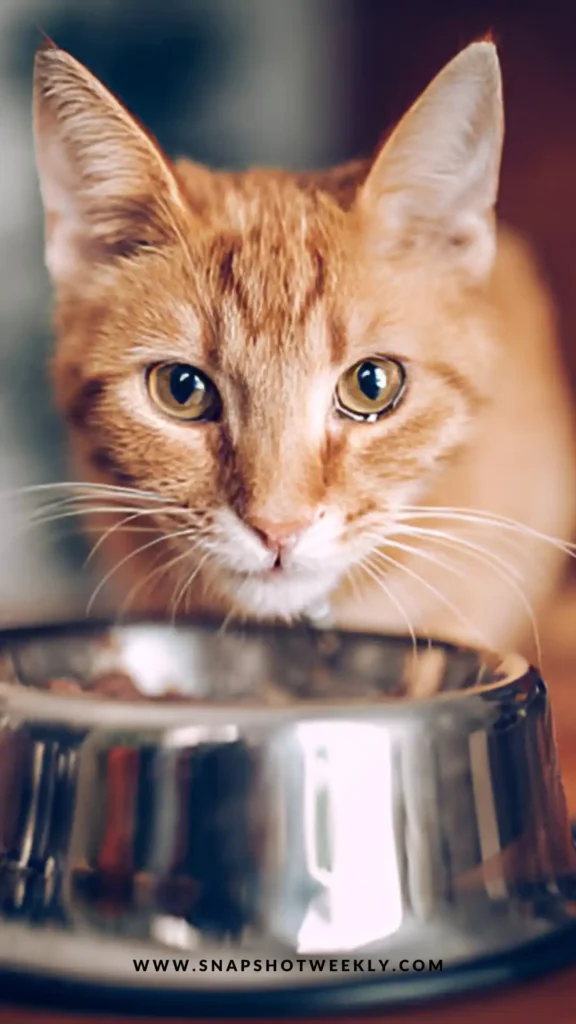
These chicken broth ice cubes are a gentle, simple way to treat your cat while encouraging extra fluid intake. I love knowing exactly what goes into them and watching my cat enjoy something homemade.
You can:
- Use different mold shapes for fun.
- Make smaller cubes for kittens or senior cats.
- Let the cube melt halfway for a softer texture.
Making little treats like this is a lovely way to care for your cat and strengthen your bond, one happy lick at a time.