

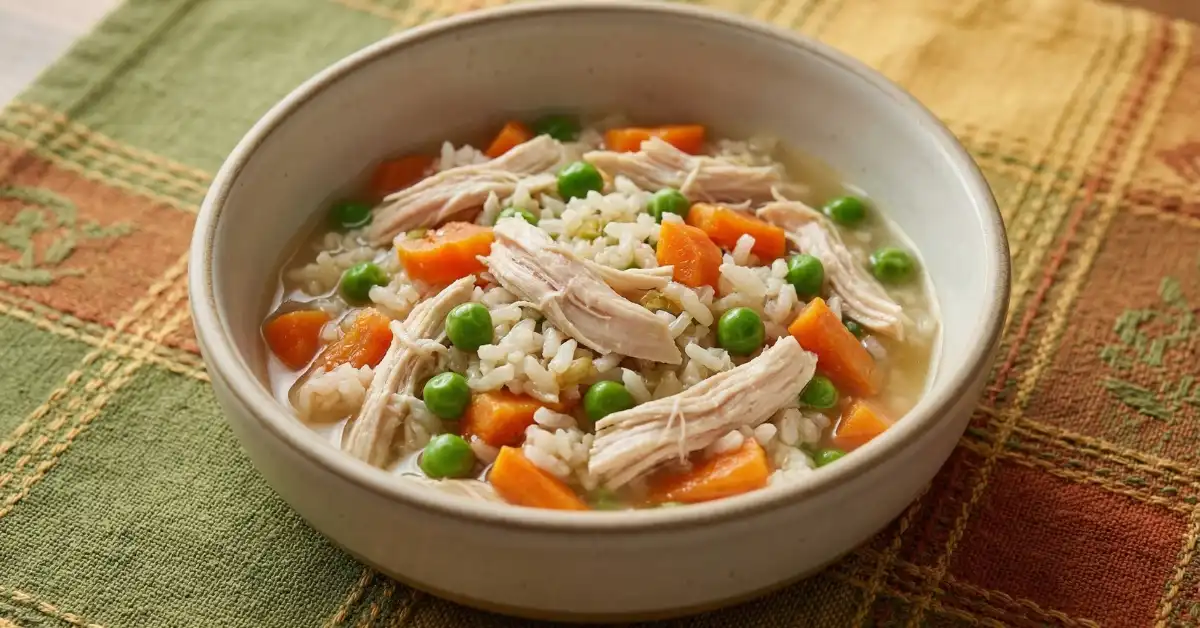
I’m so happy to share this kidney-friendly cat food idea, because it is gentle, simple, and designed to support cats who need extra care. This low-phosphorus recipe uses plain chicken, soft white rice, and cooked vegetables that are easy to digest. I like that it is homemade, calm on the stomach, and free from added salt or seasonings. It works best as a supplement or short-term option alongside your vet’s plan. The goal is to help encourage eating while staying mindful of kidney needs.
I first made this recipe when I wanted something warm and simple to help a cat who was eating less than usual. When appetite is low, strong smells or heavy foods can be too much, so I focused on soft textures and mild flavors.
What makes this recipe special is how gentle it is. The chicken is cooked plain and shredded, the rice is slightly overcooked, and the vegetables are soft and finely chopped. Everything is easy to mix, easy to chew, and easy to digest.
Here are a few reasons this recipe can be helpful:
- Mild flavors that many cats accept
- Soft texture that is easy to eat
- No added salt, oils, or seasonings
- Can be portioned and stored easily
This food is not complete on its own. Please talk to your vet about what is safe and appropriate for your cat, especially when managing kidney disease.
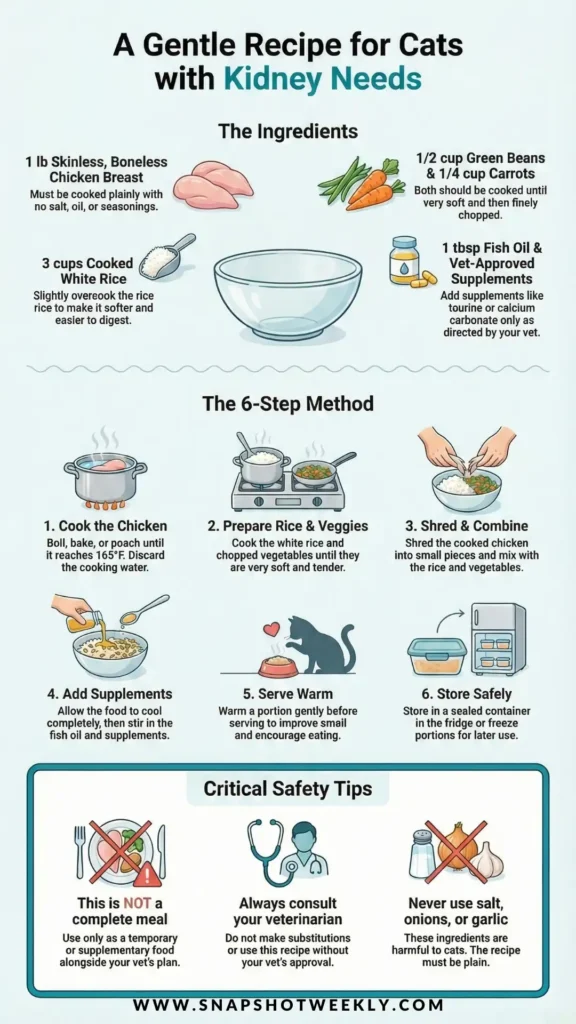
How to Make Kidney-Friendly Cat Food Idea
- Cook the chicken plainly until fully done
- Cook the rice and vegetables until very soft
- Shred the chicken into small pieces
- Mix everything together in a large bowl
- Stir in fish oil and vet approved supplements
- Portion the food for storage
- Warm gently before serving
Ingredients
- 1 pound skinless, boneless chicken breast, cooked and shredded (plain, no salt or seasoning)
- 3 cups white rice, cooked (slightly overcooked for easier digestion)
- 1/2 cup green beans, finely chopped and cooked
- 1/4 cup carrots, finely chopped and cooked
- 1 tablespoon fish oil
- Veterinarian approved supplements such as a feline multivitamin and calcium carbonate or taurine (added after cooling)
Directions
- Cook the chicken breast fully by boiling, baking, or poaching in plain water until it reaches an internal temperature of 165°F. Do not add salt, oil, or seasoning.
- Discard the cooking water after the chicken is done, since phosphorus can move into the liquid during cooking.
- Cook the white rice and vegetables until they are very soft and tender. Slightly overcooked rice is easier for cats to digest.
- Shred the cooked chicken into small pieces that are easy to chew.
- Combine the chicken, rice, and vegetables in a large bowl and mix gently.
- Add the fish oil and any vet recommended supplements after the food has cooled, then mix well so everything is evenly spread.
- Let the food cool completely before storing or serving.
- Serve at body temperature. You can warm a portion gently with warm water or low-sodium chicken broth if needed.
Process Details
- The finished food should be soft, moist, and easy to mash with a fork.
- Smaller chicken shreds help cats eat without effort.
- Overcooked rice blends better and is gentler on digestion.
- Mixing supplements after cooling helps protect their quality.
- Warming the food slightly can make it smell better and encourage eating.
Tips for Success
- Always use plain chicken with no salt, onion, or garlic.
- Do not make substitutions without your vet’s guidance.
- Introduce this food slowly over 1 to 2 weeks by mixing it with current food.
- Watch your cat’s appetite and stool during the transition.
- Keep portions small and frequent if your cat eats better that way.
- Work closely with your vet to be sure nutrition stays balanced.
Serving Ideas
- Serve as a temporary meal to support appetite
- Mix with your cat’s regular renal food during transition
- Add warm water or low-sodium broth to boost hydration
- Offer slightly warm to improve smell and taste
- Adjust portion size based on your cat’s needs and vet advice
Storage & Freezing
- Store in a sealed container in the refrigerator for short-term use.
- Portion and freeze extra food for later meals.
- Thaw frozen portions in the refrigerator, not at room temperature.
- Soft foods spoil faster, so always check smell and texture.
- Discard any food that smells off, looks strange, or becomes slimy.
This kidney-friendly cat food idea is a gentle way to support eating while working closely with your veterinarian. I like it because it is simple, calm on the stomach, and made with care at home.
- Adjust texture with warm water if your cat prefers softer food
- Serve smaller portions more often if appetite is low
- Watch your cat closely when offering any new food
Preparing food like this is one small way to show comfort, patience, and love to a cat who needs extra support.